

The UPSC Dream vs. The Ground Reality
Imagine standing in a lush green forest where elephants roam freely. Now imagine that same forest choked with plastic bags. It takes more than just a signature to fix this. It takes grit. Every year, millions of students take the civil services exam. They dream of the red beacon lights and the prestige. But what happens after the exam?
For IAS officers like Supriya Sahu and Tina Dabi, the real test began not in an examination hall but in the dry villages of Rajasthan and the plastic-filled hills of Tamil Nadu.
These two women have moved beyond the headlines of being UPSC toppers or senior bureaucrats. They are shaping India’s environment with dirt on their hands and policy in their files. This blog explores their incredible journeys from the civil services exam to becoming champions of sustainable development.
Supriya Sahu: The Guardian of the Green
Supriya Sahu is a name that resonates deeply in the corridors of environmental change. Currently serving as the Additional Chief Secretary for Environment, Climate Change, and Forests in Tamil Nadu, she has redefined what an IAS officer can do for nature.
The “Meendum Manjappai” Revolution
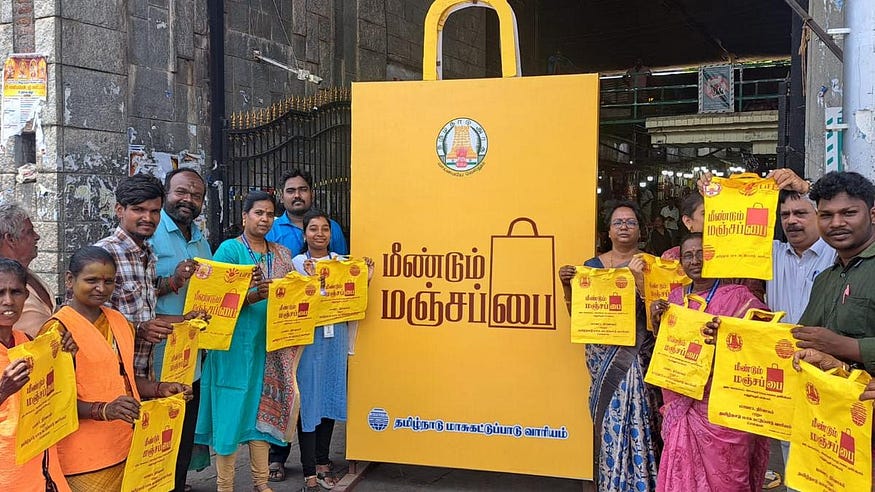
Sahu did not just sign papers. She launched a cultural revolution. In Tamil Nadu, the yellow cloth bag, or “Manjappai,” was a traditional symbol. Over time, cheap plastic replaced it. Sahu launched the “Meendum Manjappai” (Return of the Yellow Bag) campaign. This was not just a ban on plastic. It was a revival of culture. She encouraged people to carry cloth bags again. This simple shift reduced tons of plastic waste that would otherwise clog drains and harm trees.
Saving the Nilgiris
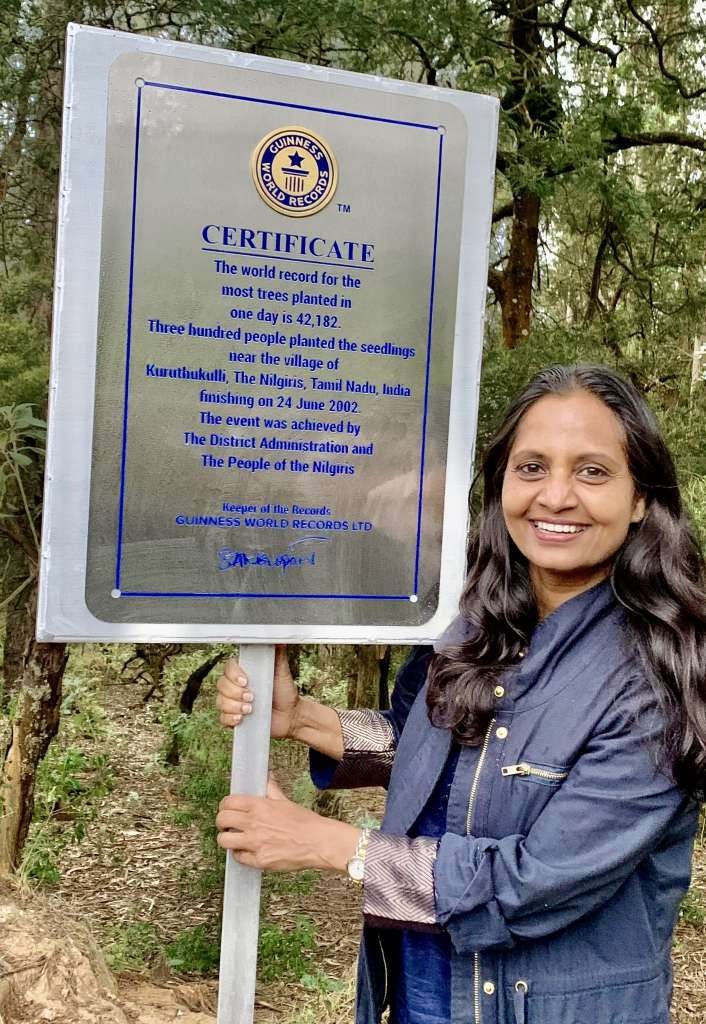
Her connection to nature is personal. Years ago, as a District Collector in the Nilgiris, she saw an elephant eating plastic garbage. That sight changed her. She launched “Operation Blue Mountain” to ban single-use plastics in the hills long before it was a national trend. This saved the local ecosystem and the wildlife that depended on it.
Saving the Schools
One of her most innovative projects is the “Cool Roof” initiative. Climate change is making Indian summers unbearable. Sahu spearheaded a project to paint the roofs of government schools and buildings with reflective white paint. This simple method drastically reduces indoor temperatures without electricity. It is a brilliant example of sustainable development that helps the poorest students learn in comfort.
Her work has been so impactful that she recently received the United Nations “Champions of the Earth” award in 2025. This is the highest environmental honour given by the UN.

Tina Dabi: The Water Warrior of the Desert
While Supriya Sahu fights for forests in the south, Tina Dabi is battling a different monster in the west. As the District Collector of Barmer (and previously Jaisalmer), she faced a harsh reality. These are desert districts where water conservation is a matter of life and death.

The “Tanka” Transformation
In Barmer, the scarcity of water was tragic. Reports stated that women had lost their lives while fetching water from dangerous depths. Tina Dabi, a celebrated UPSC topper, decided to change this. She launched the “Navo Barmer” and “Catch the Rain” campaigns. Her strategy was simple but effective. She focused on rainwater harvesting by building “Tankas” (underground water storage tanks) for every rural household.
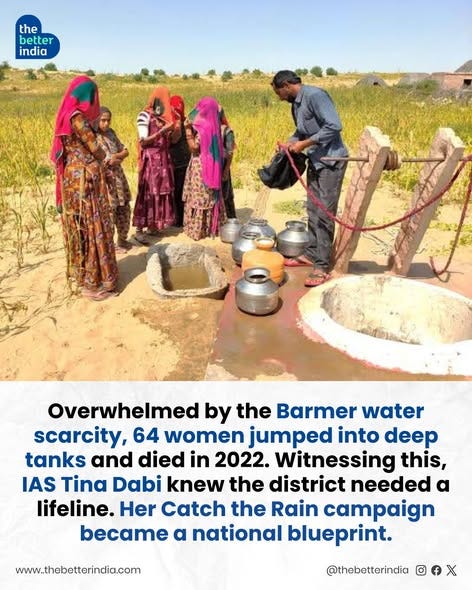
Under her leadership, the administration constructed over 87,000 rainwater tanks. She ensured that new housing schemes included a Tanka as a mandatory feature. This meant that when it rained, the water did not vanish into the sand. It was captured and stored for the dry months. This massive push for water conservation transformed the lives of thousands of village women who no longer had to walk miles for a pot of water.
Navo Barmer and Cleanliness
Tina Dabi is also known for her hands-on approach. Videos of her scolding shopkeepers for throwing garbage on the roads went viral. But it was not just for show. She enforced strict cleanliness drives in Jaisalmer and Barmer. She realised that sustainable development starts with basic civic sense. She pushed for “Swachh Barmer” to ensure that the heritage cities remained clean for tourists and locals alike.
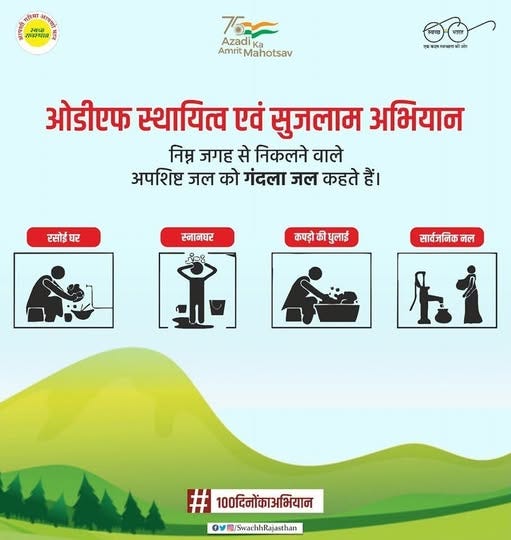
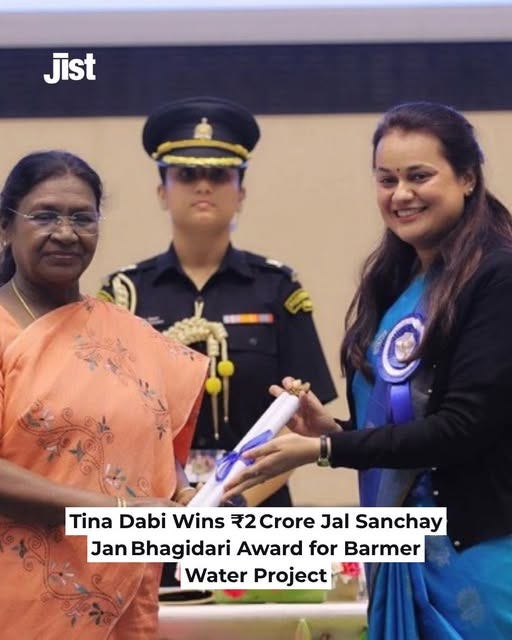
Her efforts bore fruit when Barmer received the “Jal Sanchay Jan Bhagidari” award from the President of India in 2025. The district won a cash prize of 2 crores for its excellence in rainwater harvesting.
The IAS Impact: Policy vs. Execution
Both officers show two different sides of the IAS.
Get Desi_Udyoginis’s stories in your inbox
Join Medium for free to get updates from this writer.Subscribe
Supriya Sahu works mainly at the policy level. She focuses on creating long-term plans and systems for environmental protection. She has helped design initiatives like the Tamil Nadu Climate Change Mission, which guides the state’s approach to climate action.
She has also supported programs such as Green Schools, where schools use solar energy and grow their own vegetables. Through her work, large numbers of trees are planted and wetlands are given legal protection, ensuring that environmental conservation becomes part of government policy.
On the other hand, Tina Dabi operates at the execution level. She takes government schemes and makes them work on the ground. When she builds a Tanka, she is directly solving a water crisis. When she plants trees in a desert district, she is fighting desertification inch by inch. Both approaches are vital. You need the policy to protect the forest, and you need the collector to ensure the water conservation tanks are actually built.
Why This Matters for UPSC Aspirants
For the thousands of students preparing for the government exam, these stories are a reminder. The UPSC syllabus teaches environmental ecology and biodiversity in theory. Their true meaning emerges only when this knowledge is put into practice.
- IAS officers have the power to change landscapes.
- Civil services exam success is just the entry ticket.
- Real success is when a village has water or a city has cleaner air.
Conclusion: The Green Signature
The journey of an IAS officer is often viewed through the lens of power and authority. But Supriya Sahu and Tina Dabi show us that the true power lies in responsibility. One addresses rising heat by painting roofs white to reduce temperatures. The other is digging tanks to catch the rain. Together, they prove that the Indian administrative machinery can be a force for good.
They teach us that sustainable development is not just a chapter in a textbook. It is a daily fight. Whether it is saving a forest from plastic or saving a drop of rain in the desert, every action counts. So, the next time you see a cloth bag or a rainwater tank, remember the officers behind them. They are the true guardians of India.
For more such stories, follow us at @desi_udyoginis